
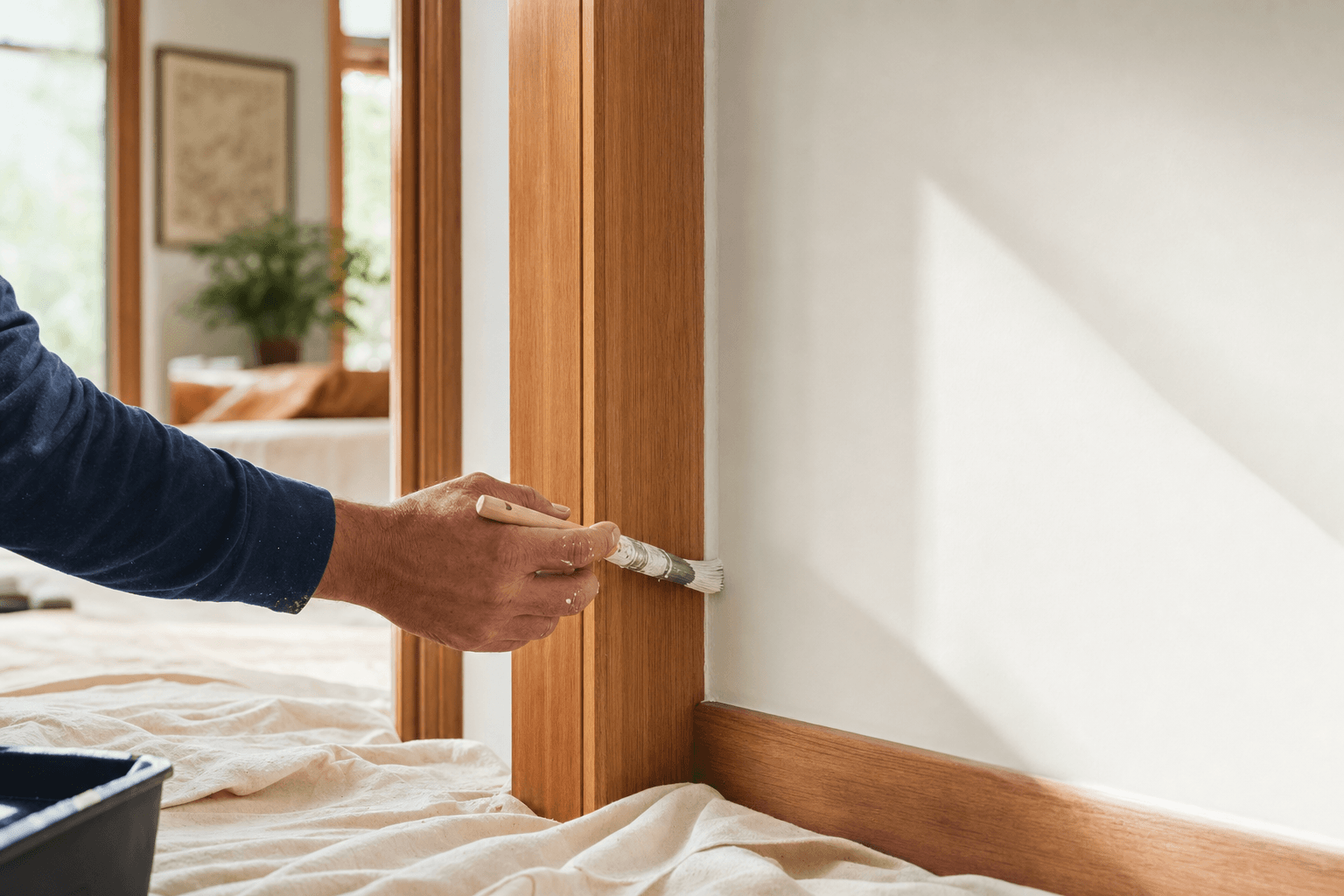
Paint shows what is underneath
Dust, grease, loose coating, old repairs, and movement do not disappear under fresh paint. They change how the new coat sticks and how light catches the surface. On trim and doorways, a poorly prepared edge can be more noticeable than the original mark.
Preparation may include cleaning, scraping, sanding, filling, spot priming, or repairing a damaged detail. The right combination depends on the surface, the existing coating, and the finish being applied.
A cleaner process produces a calmer handover
Protecting adjacent surfaces and keeping edges controlled is part of the work too. It reduces the small paint splashes and unfinished corners that make a room feel hurried when the main walls look fresh.
For Auckland homes, rentals, and small businesses, the useful question is not simply “can it be painted?” but “what does this surface need before paint will perform well?”
Common questions
Can I paint over old paint without sanding?
Sometimes a sound, clean coating needs only light preparation, but loose, glossy, greasy, or damaged surfaces need more work. The condition should be checked before painting.